

Why does itching occur?
Dryness is one of the most common causes.
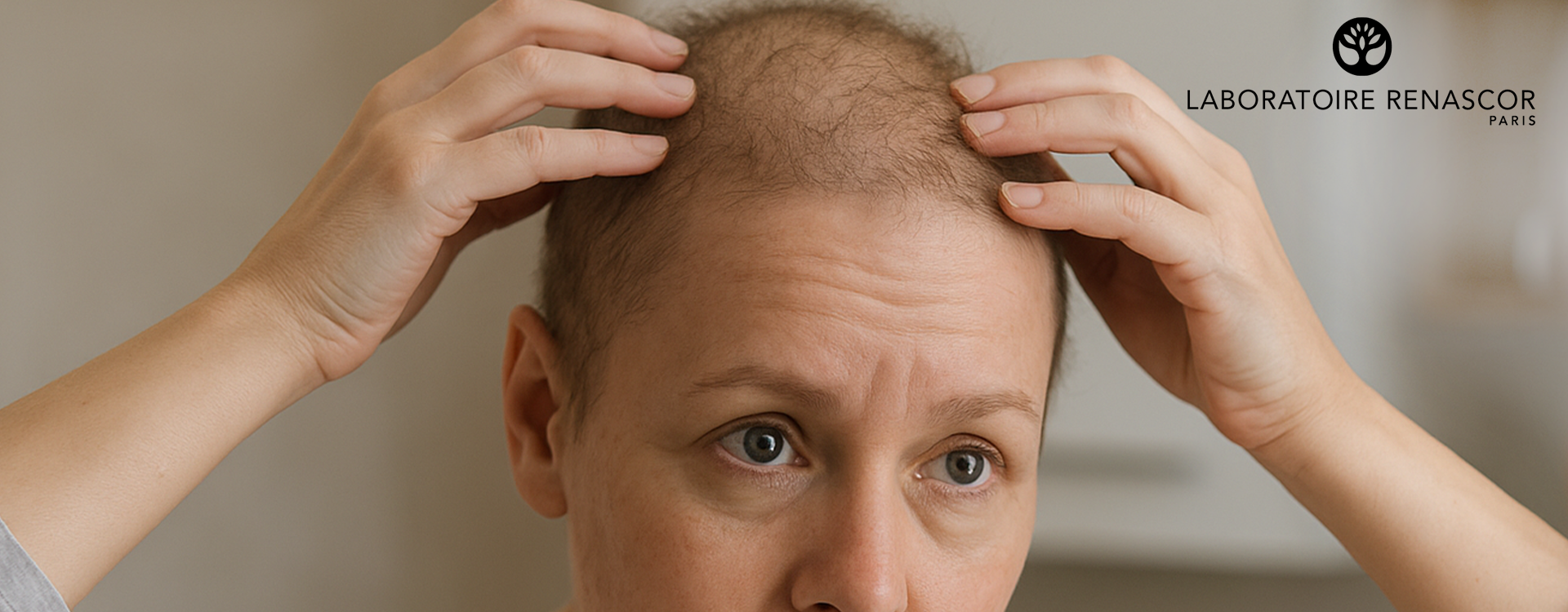
After treatment, the skin may react more strongly to hot water, shampoo, sunlight, cold weather or headwear. Once the hair has fallen out, the scalp also loses much of its usual protection.
As a result, even products that were previously well tolerated may unexpectedly cause discomfort.
Does itching mean that the hair is starting to grow?
Itching can sometimes coincide with the appearance of new, short hairs. During this period, the scalp may also feel slightly tingly or ticklish.
However, itching alone is not a sign of hair growth.
It may also be related to dryness, irritation or changes in the condition of the scalp after treatment.
Why does scalp condition matter?
The hair follicle is located within the skin. During recovery, it is therefore important to consider not only how the hair is growing, but also the condition of the scalp itself.
If itching is accompanied by marked redness, crusting, burning, pain or pronounced flaking, it is best to determine the cause of these changes first.
What can you do for mild itching?
If the scalp looks calm and there is no significant inflammation, switch to the gentlest possible care:
- use a mild cleanser;
- wash with lukewarm rather than hot water;
- minimise potentially irritating products;
- protect the scalp from sunlight and cold weather.
After chemotherapy, both the hair and the scalp recover.
The scalp is the environment in which the hair follicle is located and functions.
Maintaining scalp comfort is therefore an important part of the hair-recovery period.